Cup o'Joy :: Q 90 Interview


Coffee House to Concert House – The Cup O’ Joy Grows Up

Interview of Jan O. by: Scotty from Q90fm – January/2002
Since 1994, when Q 90 FM first went on the air, we have been blessed by being able to develop some incredible relationships. One such relationship, with the Cup O’ Joy Coffeehouse on Broadway in Green Bay, has been a great blessing to both of us. Thus, Breakfast Club co-host, Scotty took some time with Jan Oettinger (affectionately known as Jan O’) to talk about her memories of the Cup.


Scotty: When did the Cup O’ Joy first open?
Jan O’: September 1989. I wasn’t really there yet. Several people whose original vision was, I think, to have an outreach type of thing to the Broadway area, an outreach to the street, and also a coffeehouse in the traditional sense of what probably was happening in the ’70s.

They basically rented a building that was a total wreck and had been empty for quite sometime. It was built around 1900 as a shoe store next to two taverns … in its "last life" having been a print shop. It had been empty for quite a long time. The only electrical outlets in the whole place were in the ceiling where the big print shop machines plugged in.

So, basically they opened it up, cleaned it up and invited in a couple of musicians … We (Jan and her husband, Mike) went there a couple of weeks after they had opened. The artists stood under a bare light bulb and sang … This ‘pioneer group’ just kind of opened up and started reaching out to people, oh, they did have a coffeepot. (Laughter.) Lot’s of great ministry took place in a humble place.

My husband and I got involved three or four months after the place opened. At this point, the folks who had originally opened it were moving on to other interests. One of them had a heart to start a homeless shelter. At that time the Cup was at a crossroads …

About three or four families got together for a meeting. My husband went down, and I said, "Don’t volunteer for anything (laughs), you know you’re just going to drag me into this thing, too!" So he said, "I’m just going down to check it out and see if there’s something we really should be doing — I could be doing." He was really going to commit himself. He came back from that meeting, and they’d made him treasurer …

Since Mike really didn’t have a big background in keeping a ledger or doing any of those types of things, I kind of got drawn in, and he went on to do some other things. The guys built a stage, painted and such. Mike also met with the landlord and got the rent reduced, so the place could afford to operate (the Cup was blessed with an incredible landlord for 9 years). I started doing the booking of musicians and organizing the volunteer staff, which became a real passion for me.

I think a big step forward was when Tony B. came in. We had a mid-week video night where the our staff would bring in a video and they would have a discussion afterwards. Tony started coming to that, and Tony just happened to be one of these incredibly gifted people who could fix things. He actually brought the wiring off the ceiling (big step forward at the time). He wired the whole place, put up bulletin boards, built whatever our hearts desired and found a way to do it for pennies.

It was this giant leap forward to have someone like Tony come along and bring his gifts. And I think that’s what’s happened all along with the Cup, people just bringing their gifts to the table.

When did the Cup really make its transition from more of that coffeehouse, ’70s thing to really more of a concert club?
It was kind of a gradual transition, and I think what happened was an attitude more than anything ...

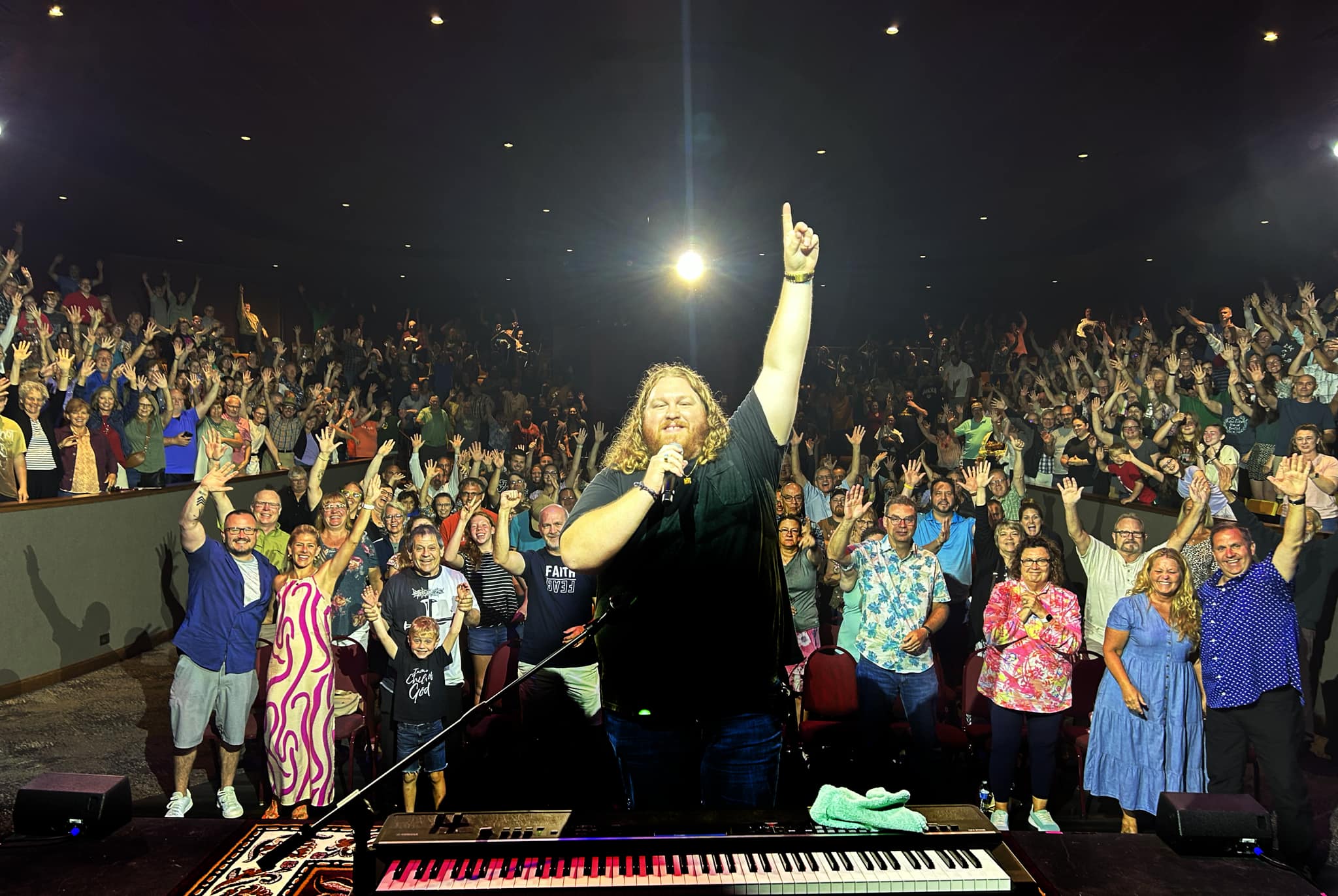
As people came from farther and farther away, we felt more of a commitment. If we’re going to drag somebody from halfway across the country, then we are going to make this a real opportunity for them to minister, to really connect with people, not have that atmosphere where they’re background music. As that more and more was established, I think so did the respect level — if you want to call it a concert venue as opposed to a coffeehouse (and I really think it’s both) — just became more and more evident.

Q90 started getting involved with the Cup in ’94, in a small way. That relationship, of course, has grown 100 fold. Now you’re bringing in national, major acts — weekend after weekend. Not the Michael W. Smiths, but the next level — the Eli’s. We’re talking national level, Eli and Tammy Trent and Apologetix.

Do you think that progression would have naturally happened, or do you think radio, and of course not just Q90, but radio was another turning point?

Definitely, when the Cup started, you know, we had two Christian radio stations in the area — WEMI and WRVM were the two Christian radio stations. And people did listen to Christian radio — there’s no doubt about it, I mean, I certainly did.
But the whole concept of having different kinds of music and heavier music for kids, like, years ago it was Stryper. But it was pretty much an underground type thing. And I think as radio evolved in our area, it certainly brought just a ton of recognition to what is out there and gave people more of an appetite and a desire to also see artists live.

Radio and live music are so important. They go together so well. Because you can listen to a person’s CD, you hear their music. But when you see them live and they share their heart, you become a friend. It becomes a relationship, and that’s what ministry’s all about. That’s what Christ is all about; Christ is all about building a relationship. And, I think that’s what so many of the Christian artists want to do — go beyond presenting music and selling CDs (that have great messages), into having relationships with people to the point where they influence them for God.

I remember it was John Cox when he played in Madison just before coming up to the Cup and there were like 12 people. And then he came up here and had, like, 300some people for two shows or whatever it was. And without that radio support there, um, you know…

I think there are two areas when I look at the Cup from a success standpoint. One is radio support, and two is people support. We’ve been around for 12 years so we’ve got kind of a system for handing out information. I mean, we have the website, we have the mailing list, and we have people in the area that are keyed in and are watching. I think it just becomes this wonderful marriage of different ministries working together.

And what’s really neat is we have several ministries that are not particularly denominational in focus, and yet, they’re able to work together and bring lots of denominations together. The radio stations and the Cup are perfect examples of that. I think that’s what God is starting to do in our hearts is broaden us. That’s been a stumbling block in the past —you have this ministry but it’s hosted by this church, and you have that ministry and it’s hosted by that church; therefore, people somehow feel walls and they’re unable to cross over.

And things like the radio station, the Cup O’ Joy, and Life Promotions — those types of ministries are now bringing these folks from different denominations together in, really, what we should have been all along in more of a joint cause to reach people for Christ.

When someone comes to the Cup, they know they’re getting reinforced, in most cases, well, if they’re national artists, they know they’re gonna get the support of the radio because they’ve got music out there that’s being played. And then that’s going to encourage people to go see them. But when they get here, the people, not only just 300some people in the Cup building that are coming there, but the people who work at the Cup are taking care of them.

We have a very mature staff, which has evolved over the years. You know, if God would have dropped the building we have now and the ministry that we have now on us ten years ago, we would have totally blown it. So, all of this came from the history that the Cup has and the passion that evolved because of the history, because of where God has brought it from to this point. And, we have a great dedication in our staff.

They love to serve. They bring their gifts to the table — some of them are cooking, hospitality, evangelism. We’ve got folks that are wonderful carpenters and people who do structural things. All these people bring their talents without reservation and with a real maturity in that they’re servants, they’re not giving for some big self-motivation … And the folks on our staff come from all different denominations and walks of life.

From a few people getting together back in 1989, in this dilapidated building, to [now being] the nicest non-denominational venue for concerts in Northeast Wisconsin (as a consistent venue).

Is this it, or is it going to grow into an even bigger place? Are you going to need a bigger building with an auditorium?

Well, you know, I’d like to say, this is it! … When we were back in the old building, none of us wanted to move. Our staff was all impassioned and focused and we were going to keep our ministry right there at 335 N. Broadway. And we were going to redo that building, and that’s where we were going to stay because that’s where God called us to be. And we tried really hard. I mean, (there were) a lot of tears over "why we can’t stay here".

And finally, God — I mean, He didn’t just shut the door, He had to slam it … He slammed it shut and opened another door so wide and with such incredible, um, wow, it was such a miracle! The whole ‘new building thing’ was definitely a miracle — how all the people came forward to do the construction, to give of their talents, to do the fundraising, to do so many things to make it work, which I, in my limited thinking — and I’m a very limited thinker! — Would’ve thought was totally impossible. But God even dragged me along, so that was a big miracle right there.

So, where’s it going to go?

I have no idea … I guess, if I had to say, I don’t really view us becoming a huge concert venue that we rent auditoriums every week or we build an auditorium the size of 1,000 seats or something. Even when we moved to this building, which wasn’t huge by some of the churches’ standards, one of our biggest concerns was, we need to keep what the Cup is — intimacy, keeping relationships going, because relationship is it, that’s what it’s all about …

I have artists who say to me, "Well, it would be easier for us to come back, if you would rent an auditorium" And it’s like, then it’s not the "Cup"! And then we have people like Eli, who say, "No, I wanna be at the Cup. I’ll do as many shows as it takes to be at the Cup." Because I think he recognizes the intimacy and the level of ministry that you can do with 300 people as opposed to 1,500 people.

So, where’s it going to go?

God only knows where it’s going to go. He has, like I say, a way of moving us when we need to move. I’m so blessed by the whole past 12 years and what He has done and the relationships and friendships that have evolved with other ministries but, mostly, those with other people. I think The Cup has been an encouragement to people. And I think Christ works through those relationships. That’s what it’s all about.


Special
Upcoming
Events

SAT SEP 6
JAKE SMITH
SAT SEP 13
PAUL ALAN
FRI SEP 19
ESTERLYN & Rex Lex

SAT OCT 4
Benefit Concert-DOWNHERE & THE MICHAEL GUNGOR BAND
SAT OCT 25
APLOLGETIX
FRI NOV 7
REMEDY DRIVE
FRI NOV 14
DISCIPLE
SAT NOV 15
LIVING RIVER QUARTET

©2002 Cup o'Joy
Contact Us